Parma Calcio: A Legacy of Resilience in Italian Football
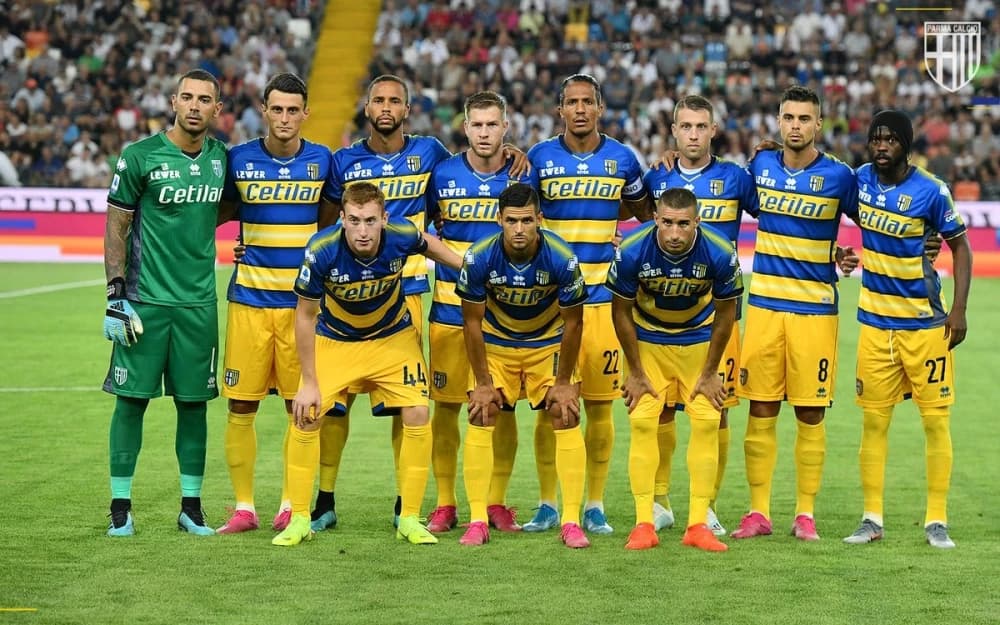
Parma Calcio 1913, rooted in tradition, showcases a remarkable journey through triumph and challenges, cultivating talent and a devoted fanbase while cementing its legacy in Italian football history.
Parma Calcio 1913, located in the charming city of Parma, Emilia-Romagna, has been an integral part of Italian football since its establishment in 1913. Originally called Verdi Foot Ball Club, the team adopted its identity through the yellow and blue colors, reflecting the city’s rich cultural legacy, which includes the famous opera composer Giuseppe Verdi.
In 1913, the club transitioned to become Parma Foot Ball Club, adopting the distinctive white jerseys adorned with a black cross. Throughout the years, Parma has represented resilience, undergoing various phases of success and challenge. Their home ground, the Stadio Ennio Tardini, has served as a reliable venue since 1923, symbolizing stability in the face of change.
The culture of Parma is deeply embedded in resilience, characterized by a devoted fanbase that has remained steadfast through financial struggles and relegations. The history of the team showcases a combination of local pride and global ambitions, making it one of the most cherished clubs in Italy.
In spite of challenges, Parma has upheld its tenacious spirit, reflecting the city’s commitment to hard work and resilience. From modest origins to remarkable comebacks in Serie A, the club continues to serve as a symbol of hope and perseverance.
Accomplishments of the Team
The golden era of Parma, spanning from 1992 to 2002, stands as a defining period of achievement in Italian football. With strong financial backing from Calisto Tanzi, the club secured eight significant trophies, which included three Coppa Italia victories and two UEFA Cup titles. Additionally, this era saw them achieve their highest Serie A finish, placing as runners-up in the 1996–97 season.
In European competitions, Parma secured notable titles including the UEFA Cup Winners’ Cup and the European Super Cup, demonstrating their capacity to compete with the top teams on the continent. These successes reinforced their standing as a powerful contender on the international football scene.
Parma achieved an extraordinary milestone by securing three straight promotions from Serie D to Serie A following their bankruptcy in 2015, a testament to their unyielding determination. This remarkable accomplishment not only highlighted their strength but also established a new record in the annals of Italian football.
The club's rich history is further emphasized by its active involvement in European tournaments and its ability to develop exceptional talents such as Gianluigi Buffon and Hernán Crespo, both of whom became icons in the world of football.
Strengths and Weaknesses
The strength of Parma lies in its profound ties to the local community and a dedicated fanbase that stands by the team in both good and challenging times. The club has demonstrated remarkable resilience in recovering from difficulties, placing significant importance on collaboration and perseverance.
The facilities, notably the historic Stadio Ennio Tardini, serve as a strong foundation for the club. Parma has a rich tradition of cultivating talented players through its youth academy, ensuring a steady influx of promising talents. Their recent promotion back to Serie A underscores their resurgence in the competitive landscape.
Parma has frequently faced financial difficulties, with mismanagement contributing to their periods of downturn. The process of rebuilding following bankruptcy has proven to be a tough challenge, as limited resources have hindered their capacity to attract high-caliber talent.
The team has encountered fluctuations in its performances, finding it challenging to secure a stable position in Serie A. Concerns have arisen regarding defensive weaknesses and insufficient squad depth in recent seasons. Tackling these challenges will be essential for achieving lasting success.
Tactics & Playing Style
Over the years, Parma's tactical strategy has transformed, successfully merging the traditional defensive discipline characteristic of Italian football with an attacking style. Their focus on collaboration and well-organized defensive formations has frequently been a defining feature.
During the 1990s, Parma gained a reputation for its practical yet efficient style of football, excelling particularly in set pieces and counterattacks. Players like Crespo and Enrico Chiesa flourished in a system that effectively combined creativity with efficiency.
Under the current management, Parma aims to meet the challenges of contemporary football by incorporating possession-oriented strategies and swift transitions. Their emphasis continues to be on exploiting the flanks and leveraging the technical abilities of their attacking players.
One of the team's notable strengths is its ability to adapt to the tactics of opposing teams, which helps them remain competitive, even against more formidable opponents. Striking a balance between tradition and innovation will be crucial as they face the challenges of Serie A.
Memorable Matches
In the 1993 UEFA Cup Final, Parma achieved a 3-1 aggregate victory against Royal Antwerp, which earned them their first European trophy and signified their emergence on the international football scene.
1995 UEFA Cup Winners' Cup Final: Parma's 1-0 victory over Arsenal in Copenhagen highlighted the team's tactical genius and defensive strength.
1999 UEFA Cup Final: A decisive 3-0 win against Olympique de Marseille highlighted Parma's supremacy during their golden period.
2015 Serie D Promotion: Following their bankruptcy, the club began its journey back to professional football with an extraordinary season in Serie D, rekindling optimism among the supporters.
Looking Ahead
Parma's immediate priority is to establish a strong foothold in Serie A after their promotion in 2023. To ensure long-term success, it is essential to enhance the squad with strategic transfers and to focus on nurturing young talent.
Ensuring financial stability continues to be a top priority, with initiatives aimed at attracting investments and maximizing revenue channels. Renovating facilities, particularly modernizing Stadio Ennio Tardini, is expected to improve fan interaction and enhance the overall matchday experience.
The club aspires to reclaim its past European successes by methodically developing a competitive squad. Key to this vision is the establishment of consistent performances and the adoption of innovative football tactics.
With a solid foundation, Parma is ready to regain its position as a significant player in Italian football, reflecting the resilience and passion that characterize its identity.