
Login
U.S. Davis Cup Team Faces Setback in Quarterfinal Loss
Tennis

U.S. Davis Cup Team Faces Setback in Quarterfinal Loss

In a dramatic Davis Cup quarterfinal, the U.S. team's ambitious strategy falls flat as they face Australia, continuing their struggle to reclaim dominance in a sport rich with history yet fraught with recent disappointments.

The U.S. Davis Cup team, long regarded as a powerhouse, encountered yet another difficult moment in its effort to break a 17-year title drought. In a crucial quarterfinal match against Australia in Málaga, Spain, on Thursday, U.S. captain Bob Bryan’s daring choice to reorganize his doubles team turned out to be detrimental, resulting in yet another missed opportunity for the Americans.

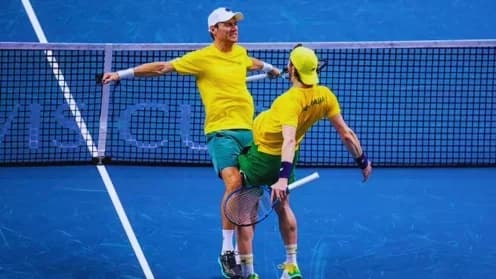
A doubles legend with 16 Grand Slam titles to his credit, Bryan took a risk by implementing an unorthodox strategy, replacing experienced doubles experts Austin Krajicek and Rajeev Ram—2024 Paris Olympics silver medalists—with singles stars Tommy Paul and Ben Shelton. The reasoning behind this was to try to outsmart the Australian team with an unforeseen pairing. However, the outcome was a 6-4, 6-4 loss to the strong Australian duo of Matt Ebden and Jordan Thompson, who advanced their team to the semifinals.

Bryan's strategic gamble was based on data analysis, familiarity, and instinct. "We were aiming to catch the Australians slightly off guard," Bryan stated after the match. However, despite its strategic rationale, the choice failed to create the intended surprise effect. Australian captain Lleyton Hewitt, a former Davis Cup veteran himself, indicated that there was no element of surprise involved.

“I noticed Paul and Shelton practicing doubles during the week,” Hewitt commented. “It didn’t catch me off guard.”

The U.S. team has an impressive legacy with 32 Davis Cup titles, yet their most recent victory was in 2007—when Bryan was still a member of the winning team. This defeat highlights a significant issue in American men’s tennis; while players excel in individual competitions, translating that success to the team format has proven difficult, with their last semifinal showing happening in 2018.

At first glance, the choice of Paul and Shelton appeared to be a fascinating gamble. Both athletes are emerging talents in singles, having made significant semifinal appearances in their careers. Nevertheless, doubles presents a completely different challenge. Their minimal partnership experience—having contested only one ATP event together, the 2023 Miami Open—stands in stark contrast to the impressive records of Ebden and Thompson. The Australian duo are Grand Slam doubles champions and demonstrate the essential synergy needed to excel in the fast-paced and strategic world of doubles tennis.

Bryan's rationale also took into account Ebden's prior experience with Krajicek and Ram, the players he had defeated alongside John Peers to win gold in the Paris Olympics final. Furthermore, he referenced Shelton's earlier singles encounter with Thanasi Kokkinakis—a challenging three-set match—as a contributing factor. Bryan was optimistic that Shelton's 'rhythm' from that match could provide an edge in doubles.

Shelton's defeat in singles against Kokkinakis, with scores of 6-1, 4-6, 7-6 (14), was a true emotional journey. The young American displayed remarkable determination, saving six match points before ultimately failing to convert four of his own during a tense final-set tiebreaker.

“It’s definitely disappointing,” Shelton acknowledged.

Taylor Fritz, the runner-up at the U.S. Open, showcased an impressive performance to equalize the match, triumphing over Alex de Minaur with a score of 6-3, 6-4. However, this moment of relief was fleeting. Within 15 minutes of Fritz's victory, Bryan and his team finalized their critical lineup decision—a conclusion influenced by six days of practice, analysis, and discussions with both players and coaches.

“As a captain, making difficult choices is part of the role,” Bryan stated. “This was not a clear-cut situation. The margin was extremely slim, and we decided to go with it.”

The weight of making his debut in the Davis Cup was significant for Shelton, who took a moment to thoughtfully consider his first experience in the tournament.

Shelton expressed his disappointment, saying, 'It's really tough not to secure a win in one of those two matches.'

In contrast, the Australian duo benefited from their strong teamwork and extensive experience. Ebden and Thompson remained unfazed by the changes and carried out their strategy with remarkable accuracy, utilizing their complementary playing styles and years of collaboration to outsmart their American rivals.

The legacy of the U.S. Davis Cup, although rich and celebrated, is becoming overshadowed by its recent failures. Even with a wealth of talent at their disposal, the team has consistently struggled in international competition. Bryan's bold decision, while justifiable considering the situation, underscores the greater difficulties faced in contemporary Davis Cup tennis—specifically, the necessity for teamwork in doubles, the intricate strategies involved in team competitions, and the narrow margins that distinguish success from failure.


The U.S. Davis Cup team, long regarded as a powerhouse, encountered yet another difficult moment in its effort to break a 17-year title drought. In a crucial quarterfinal match against Australia in Málaga, Spain, on Thursday, U.S. captain Bob Bryan’s daring choice to reorganize his doubles team turned out to be detrimental, resulting in yet another missed opportunity for the Americans.

A doubles legend with 16 Grand Slam titles to his credit, Bryan took a risk by implementing an unorthodox strategy, replacing experienced doubles experts Austin Krajicek and Rajeev Ram—2024 Paris Olympics silver medalists—with singles stars Tommy Paul and Ben Shelton. The reasoning behind this was to try to outsmart the Australian team with an unforeseen pairing. However, the outcome was a 6-4, 6-4 loss to the strong Australian duo of Matt Ebden and Jordan Thompson, who advanced their team to the semifinals.

Bryan's strategic gamble was based on data analysis, familiarity, and instinct. "We were aiming to catch the Australians slightly off guard," Bryan stated after the match. However, despite its strategic rationale, the choice failed to create the intended surprise effect. Australian captain Lleyton Hewitt, a former Davis Cup veteran himself, indicated that there was no element of surprise involved.

“I noticed Paul and Shelton practicing doubles during the week,” Hewitt commented. “It didn’t catch me off guard.”

The U.S. team has an impressive legacy with 32 Davis Cup titles, yet their most recent victory was in 2007—when Bryan was still a member of the winning team. This defeat highlights a significant issue in American men’s tennis; while players excel in individual competitions, translating that success to the team format has proven difficult, with their last semifinal showing happening in 2018.

At first glance, the choice of Paul and Shelton appeared to be a fascinating gamble. Both athletes are emerging talents in singles, having made significant semifinal appearances in their careers. Nevertheless, doubles presents a completely different challenge. Their minimal partnership experience—having contested only one ATP event together, the 2023 Miami Open—stands in stark contrast to the impressive records of Ebden and Thompson. The Australian duo are Grand Slam doubles champions and demonstrate the essential synergy needed to excel in the fast-paced and strategic world of doubles tennis.

Bryan's rationale also took into account Ebden's prior experience with Krajicek and Ram, the players he had defeated alongside John Peers to win gold in the Paris Olympics final. Furthermore, he referenced Shelton's earlier singles encounter with Thanasi Kokkinakis—a challenging three-set match—as a contributing factor. Bryan was optimistic that Shelton's 'rhythm' from that match could provide an edge in doubles.

Shelton's defeat in singles against Kokkinakis, with scores of 6-1, 4-6, 7-6 (14), was a true emotional journey. The young American displayed remarkable determination, saving six match points before ultimately failing to convert four of his own during a tense final-set tiebreaker.

“It’s definitely disappointing,” Shelton acknowledged.

Taylor Fritz, the runner-up at the U.S. Open, showcased an impressive performance to equalize the match, triumphing over Alex de Minaur with a score of 6-3, 6-4. However, this moment of relief was fleeting. Within 15 minutes of Fritz's victory, Bryan and his team finalized their critical lineup decision—a conclusion influenced by six days of practice, analysis, and discussions with both players and coaches.

“As a captain, making difficult choices is part of the role,” Bryan stated. “This was not a clear-cut situation. The margin was extremely slim, and we decided to go with it.”

The weight of making his debut in the Davis Cup was significant for Shelton, who took a moment to thoughtfully consider his first experience in the tournament.

Shelton expressed his disappointment, saying, 'It's really tough not to secure a win in one of those two matches.'

In contrast, the Australian duo benefited from their strong teamwork and extensive experience. Ebden and Thompson remained unfazed by the changes and carried out their strategy with remarkable accuracy, utilizing their complementary playing styles and years of collaboration to outsmart their American rivals.

The legacy of the U.S. Davis Cup, although rich and celebrated, is becoming overshadowed by its recent failures. Even with a wealth of talent at their disposal, the team has consistently struggled in international competition. Bryan's bold decision, while justifiable considering the situation, underscores the greater difficulties faced in contemporary Davis Cup tennis—specifically, the necessity for teamwork in doubles, the intricate strategies involved in team competitions, and the narrow margins that distinguish success from failure.

Image Description

An economist by training, Priya transitioned into sports journalism, bringing her love for data and strategy. She specializes in global sports dynamics, especially in cricket and tennis.

you may also like