Rublev's Withdrawal Sparks Debate Over Tournament Commitments
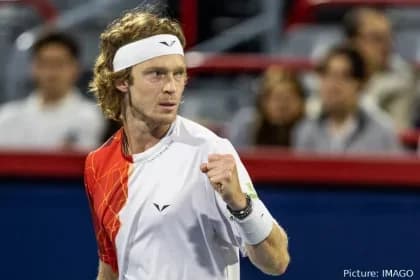
In a heated exchange, Andrey Rublev's withdrawal from the Moselle Open sparks controversy as Lorenzo Musetti questions the commitment among top tennis players, highlighting the struggle between competition and strategic priorities in the demanding tennis season.
In the dynamic landscape of professional tennis, athletes routinely find themselves balancing the fine line between competition and strategy, especially as the season draws to a close. Andrey Rublev’s recent decision to withdraw from the Moselle Open has ignited a dispute with Italy’s Lorenzo Musetti, who has expressed doubts about the fairness of the Russian player’s involvement in the tournament.
Currently participating in the ATP Finals in Turin, Italy, Rublev secured his place at this prestigious year-end tournament after Novak Djokovic, the ex-world number one, withdrew due to injury concerns. This situation undoubtedly worked to Rublev's advantage, yet it also prompted inquiries regarding his commitment to the Moselle Open, where his withdrawal was surrounded by controversy.
The situation unfolded in Metz, where Rublev reached the quarterfinals after defeating Musetti with a score of 6-4, 6-3 in the round of 16. However, once it was confirmed that he had secured his spot in the ATP Finals, Rublev chose to withdraw from the tournament entirely, citing his qualification as the main reason. This decision was met with discontent from Musetti, who voiced his frustration regarding Rublev's actions in a straightforward manner.
Musetti’s remarks, made during a recent interview, underscored the rising tension regarding players' involvement in end-of-season tournaments. “If a player is not willing to fully commit and compete for the title, they are simply occupying a spot that could be better used by someone else who has more to gain,” Musetti stated. This perspective from the Italian is quite valid: in a highly competitive sport like tennis, every player's position in a tournament is closely examined, and many believe that each match should hold significance, particularly when so much is at stake.
Rublev, on the other hand, was quick to address these criticisms. Keeping his characteristic composure, the world number nine defended his choice, underscoring the necessity of focusing on long-term objectives in a season that already requires a significant amount of physical and mental stamina. “Everything is relative,” Rublev stated, recognizing the difficulties of managing several high-stakes tournaments alongside the demanding ATP schedule. He clarified that his decision was not intended to show any disrespect towards the Moselle Open or his fellow competitors, but was instead aimed at ensuring he would be in optimal shape for the season's most coveted prize – the ATP Finals.
The exchange between Rublev and Musetti highlights a larger concern that is becoming more common during the closing stages of the tennis season. As the ATP Finals serve as the climax of a player's year, numerous athletes find themselves grappling with the challenge of balancing fatigue and injuries while striving to remain competitive in other tournaments.
Rublev’s choice to pull out of the Moselle Open after confirming his spot in the Finals illustrates an increasing trend among elite players who favor the high-pressure, end-of-season competitions over other tournaments that might not provide as significant rewards, whether regarding rankings or prize money.
Undoubtedly, there is no ideal resolution to this issue. Musetti’s viewpoint is echoed by numerous players who are still competing for ranking points, opportunities, and the chance to achieve a breakthrough in significant tournaments. For them, every event is crucial, and the idea that a position in the draw could be occupied by a player with differing priorities can be quite frustrating. Conversely, Rublev’s position underscores the harsh realities of a demanding schedule and the necessity to conserve energy for overarching goals.
As the 2023 season draws to a close, discussions like this highlight the pressures that contemporary tennis professionals face. With the ATP Finals currently in progress, all attention will be focused on how players such as Rublev maintain their performance and energy levels, while Musetti and others persist in pursuing their ambitions. However, it is evident that the dialogue about tournament commitment and priorities is far from settled—both players and fans will continue to grapple with the intricate dynamics of modern tennis.
Ultimately, Rublev's choice may have been tactical, yet it introduces an additional layer of intrigue to the continuously unfolding story of the sport, wherein player decisions are seldom as simple as they appear.