
Iconic Stadio Olimpico: Rome's Sports and Cultural Heart
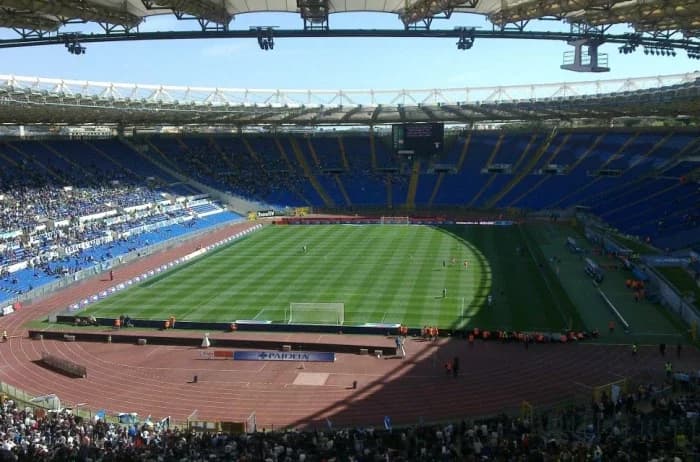
The Stadio Olimpico stands as a magnificent symbol of Italy's love for sports, hosting thrilling matches and unforgettable cultural events amid stunning surroundings in Rome.
The Stadio Olimpico is a majestic symbol of Italian sports, proudly located within the Foro Italico sports complex in Rome, Italy. Situated at the foot of Monte Mario in the lively Della Vittoria neighborhood, this iconic stadium reflects Italy's deep-rooted enthusiasm for football, athletics, and cultural events. Since its grand inauguration on May 17, 1953, with a match pitting Italy against Hungary, the stadium has evolved into one of the most esteemed venues globally.
Originally built to accommodate an impressive 100,000 spectators, the Olimpico was designed to reflect the magnificence of Italian architecture and the country's increasing passion for sports. Throughout the years, the stadium has undergone several renovations, each one improving its structure and amenities while maintaining its historical character. Now, with a reduced capacity of 74,000 seats, it remains a key venue for Italy’s sports and cultural events.
The Stadio Olimpico serves as the home stadium for two of Serie A's most legendary clubs, AS Roma and SS Lazio. Their intense rivalry produces some of the most thrilling atmospheres in global football. Additionally, it frequently hosts matches for the Italian national football team, further enhancing its prestigious reputation. Beyond football, the stadium has also been a venue for athletic competitions, concerts featuring internationally acclaimed artists, and grand events that bring together fans and spectators from all over the world.
Throughout its history, the venue has played a crucial role in numerous significant moments. It was a prominent site during the 1960 Summer Olympics, hosting both the opening and closing ceremonies along with various athletic events. Additionally, the Stadio Olimpico was a crucial location for the 1990 FIFA World Cup, cementing its status in sports history. It has also been the host for major European tournaments, such as the UEFA European Championships, several Champions League finals, and numerous Coppa Italia finals.
Set amidst the beautiful landscape of the Foro Italico complex, those visiting the Stadio Olimpico enjoy much more than just a game or an event. The area is filled with historical sites, lush greenery, and trails that provide stunning views of the city. Its prime location guarantees easy access while offering visitors a deep dive into the vibrant culture of Rome.
Renowned as one of the most iconic stadiums in the world, the Stadio Olimpico transcends its role as a mere sports arena; it embodies resilience, tradition, and the profound passion of a nation for sports and culture. It serves as a gathering place where history, fervor, and contemporary spirit merge, crafting lasting memories for both players and fans.
Memorable Matches
The Stadio Olimpico has hosted countless memorable matches that have left a lasting impact on the history of football. One of its most significant moments was the inaugural match in 1953, a captivating clash between Italy and Hungary that marked the debut of this legendary venue. During the 1960 Olympics, the stadium drew global attention as it held both the opening and closing ceremonies, as well as athletics events, embodying the spirit of togetherness and sporting excellence.
In 1968, the stadium hosted a momentous event as Italy claimed victory in the European Championship final against Yugoslavia. After a tense draw in the initial match, Italy triumphed in the replay, winning 2-0 and securing glory for the home nation. Twelve years later, during Euro 1980, the Stadio Olimpico was the venue for three group matches and the final, where West Germany emerged victorious over Belgium with a score of 2-1, further establishing its status as a leading football arena.
The stadium's magnificence was highlighted during the 1990 FIFA World Cup, where it served as the venue for all of Italy's group stage matches and the ensuing knockout rounds, culminating in the final match between West Germany and Argentina. In a thrilling confrontation, West Germany triumphed with a close 1-0 victory, a contest that has become a significant part of football history. The Olimpico has also been the host for numerous European Cup and Champions League finals, including Liverpool’s 1977 win over Borussia Mönchengladbach and the 1984 final, which was an intense encounter between Liverpool and AS Roma that ended in a penalty shootout.
In recent history, the 1996 Champions League final featured Juventus triumphing over Ajax in a dramatic penalty shootout. Then, in 2009, Barcelona showcased an impressive performance, defeating Manchester United 2-0, which solidified their dominance in European football. These memorable matches not only demonstrate the Stadio Olimpico's capacity to host high-stakes events but also emphasize its status as a venue where legends are forged and unforgettable moments unfold.
Attributes & Amenities
The Stadio Olimpico is a remarkable example of architectural achievement and contemporary sports facilities. Originally built to hold up to 100,000 spectators, the stadium has undergone multiple significant renovations to uphold its reputation as one of the world's most esteemed venues. After its initial build, extensive improvements were made for the 1960 Olympics, which transformed the broad terraces into seating areas, thereby reducing its capacity to 53,000 while greatly enhancing the comfort and safety of spectators. Additional updates were introduced prior to the 1990 FIFA World Cup, modernizing the stadium with features such as bringing the pitch closer to the audience for a more engaging viewing experience, along with the installation of a cutting-edge roof to provide better shelter for fans against weather conditions.
The stadium features top-notch amenities, including generous seating arrangements that provide unobstructed views from all points, exclusive lounges that deliver premium hospitality services, and state-of-the-art media and broadcast facilities designed for global coverage. Advanced lighting systems flawlessly illuminate the pitch for nighttime events, while sophisticated sound systems enhance the electric atmosphere created by the audience.
The Stadio Olimpico features a wide range of facilities aimed at enhancing the experience for fans. Attendees can relish an assortment of food and drink choices available at conveniently placed concession stands, which reduce wait times during peak events. The stadium is designed to be fully accessible, providing accommodations for spectators with disabilities, such as specialized seating areas, elevators, and pathways that are easily navigable.
The area surrounding the stadium is equipped with ample parking options and a comprehensive transportation network, ensuring easy access for both local and international guests. The nearby Foro Italico sports complex enhances the experience, featuring additional amenities such as swimming pools, training facilities, and tennis courts, establishing it as a center for sports and recreational activities.
Recently, renovations have emphasized sustainability and technological advancements, incorporating energy-efficient lighting and enhanced digital ticketing systems to streamline the entry experience. These improvements not only help the Stadio Olimpico maintain its historical appeal but also ensure it meets the requirements of contemporary sporting events, providing a world-class experience for both athletes and fans.
Significance in History
The Stadio Olimpico possesses profound historical significance, serving not only as a representation of Italian sports culture but also as a site that has witnessed significant events in international football and athletics. Built during Italy's Fascist regime as a part of the expansive Foro Italico sports complex, its establishment reflects the close relationship between politics and sports in early 20th-century Europe. Originally envisioned as the Stadio dei Cipressi, it evolved into a prominent venue for grand assemblies and competitions, symbolizing the regime's aspirations for grandeur and unity through sports.
The Stadio Olimpico's involvement in the 1960 Rome Olympics represented a significant moment, highlighting Italy's resurgence in the aftermath of World War II on an international level. By hosting both the opening and closing ceremonies as well as the athletic competitions, it provided a backdrop for legendary achievements, including Wilma Rudolph's remarkable victories, which epitomized the triumph over challenges. These games also signified the transformation of the Stadio Olimpico from a local venue to a globally recognized sports facility.
Its importance was further amplified as it became the central venue for significant football competitions, including the UEFA European Championships in 1968 and 1980, the FIFA World Cup in 1990, and several European club finals. Notable matches, such as the Euro 1968 final in which Italy triumphed after a replay against Yugoslavia, and the 1990 World Cup final where Germany emerged victorious over Argentina, significantly enhanced the stadium’s reputation in football history.
The Stadio Olimpico has remained a significant fixture in Italian football, serving as the common ground for AS Roma and Lazio. It has witnessed numerous intense derbies and memorable moments that encapsulate the passionate rivalry between these two teams.
In addition to its sporting events, the Stadio Olimpico has served as a venue for concerts, cultural gatherings, and various ceremonies, establishing itself as a versatile location. Its ability to withstand numerous renovations over the years demonstrates its flexibility and ongoing significance. By adopting both technological and structural improvements, the stadium has maintained its historical legacy while continuing to function as a contemporary center for international events.
Currently, the Stadio Olimpico is more than just a venue for sports; it symbolizes Italy's cultural and historical journey, embodying the unity, enthusiasm, and vibrancy that characterize the country's connection to athletics.
Future Events
The Stadio Olimpico remains a central venue for premier sporting and entertainment events, holding onto its status as one of the most iconic locations in Europe. In the upcoming period, it is scheduled to welcome a number of prominent football matches, including Serie A games featuring AS Roma and Lazio, two of Italy’s most fervent football teams. Additionally, the stadium plays a crucial role in the Coppa Italia, with its grand finals frequently showcased under the dazzling lights of the Olimpico, enhancing the excitement and significance of the tournament.
International football plays a vital role in the events schedule of the Stadio Olimpico, as the stadium regularly hosts matches that feature the Italian national team. With Italy gearing up for the forthcoming UEFA European Championship qualifiers and friendly matches, fans can anticipate thrilling displays from the Azzurri as they strive for success. Moreover, the stadium is under consideration for significant matches in future international tournaments, further cementing its status within the world of football.
In addition to hosting football matches, the Stadio Olimpico remains a venue for significant cultural events, featuring international music concerts by famous artists from around the world. Its impressive capacity, excellent acoustics, and rich historical atmosphere make it an ideal location for performers wanting to create memorable experiences in the Eternal City. Audiences can anticipate a variety of shows that bring together diverse crowds beneath the beautiful Roman sky.
The Stadio Olimpico continues to serve as a prominent venue for the annual Golden Gala, which is part of the Diamond League series in athletics. This prestigious event attracts the top track and field athletes from around the globe, who compete before an enthusiastic audience, honoring the stadium's rich Olympic heritage.
With initiatives underway to upgrade and modernize specific sections, the Stadio Olimpico is set to improve the experience for fans while continuing to host a diverse array of events. Its capacity to merge tradition with contemporary elements ensures its status as a central hub for sports and entertainment in Italy for many years ahead.
Experience for Fans
Experiencing an event at the Stadio Olimpico is truly memorable, providing a distinctive mix of history, enthusiasm, and contemporary facilities. Located in the renowned Foro Italico district of Rome, the stadium offers spectators stunning views of Monte Mario and immerses them in a location rich in tradition. Be it a football game, a concert, or a significant athletic competition, the energy at the Stadio Olimpico is vibrant, driven by passionate supporters of AS Roma and Lazio, along with fans visiting from all around the world.
The journey to the stadium creates an inviting atmosphere, featuring easy access through public transport, plenty of parking facilities, and picturesque views surrounding the sports complex. Upon entering, fans find themselves in a spacious seating area beneath a striking roof that enhances sound quality while providing an unobstructed view of the field or stage from almost every position.
Throughout the venue, food and beverage stalls are thoughtfully positioned, providing a variety of traditional Italian snacks and drinks, as well as international selections. Hospitality services, such as VIP lounges and premium seating areas, are available for those desiring a more upscale experience. These areas feature exclusive dining options, comfortable seating, and convenient access to the events, ensuring a visit that is both enjoyable and unforgettable.
The design of the stadium fosters inclusivity, featuring amenities for fans with disabilities and families, which guarantees a hospitable atmosphere for everyone. Advanced screens and sound systems enhance the live experience, ensuring that spectators remain engaged and informed during the event. The newly upgraded seating provides comfort even during lengthy events, while the lively crowd contributes to the ambiance, transforming any occasion into a memorable event.
The passion for football in this region is unmatched, particularly during the Derby della Capitale, where AS Roma and SS Lazio compete against each other. The atmosphere is electrifying, filled with chants, colorful flags, and impressive tifos that create a vibrant spectacle that lingers long after the match concludes. Moreover, the stadium's iconic ambiance enhances concerts and cultural events, transforming them into unforgettable experiences that feel truly unique.
Upon leaving the stadium, fans have the opportunity to wander through the Foro Italico complex, which features walking paths and notable landmarks that enrich the overall experience. The Stadio Olimpico offers more than just a sporting event or performance—it provides a deep cultural experience at the heart of Rome's sporting and entertainment heritage.